Mass Migrant Crossing Into Spain's Ceuta Sparks EU Crisis Response
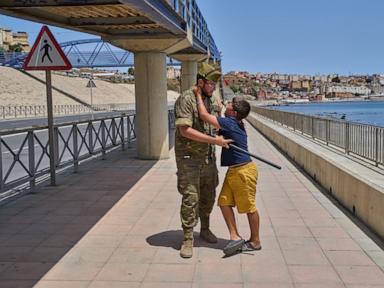
A large-scale crossing of migrants from Morocco into the Spanish exclave of Ceuta in late July prompted an emergency EU response and reporting on deaths, returns, and unresolved questions about how the crossing occurred. Outlets differ in emphasis: some focus on humanitarian impact on children and casualties, others on EU political reaction and border security, and others on unresolved questions and potential follow-up crossings.
In late July 2026, a mass crossing of migrants occurred from Morocco into Ceuta, a Spanish exclave in North Africa, with reports indicating roughly 72,000 people entered during the event. Spanish officials said that around 70,000 of those migrants were subsequently returned to Morocco. The Spanish government reported at least 75 deaths connected to the crossing, though further details on the circumstances of these deaths were not specified across sources. Hundreds of migrant children were reported stranded in Ceuta following the crossing, according to ABC News. The scale of the crossing prompted an urgent meeting of European Union interior ministers to discuss the bloc's response. European Commission President Ursula von der Leyen called for strengthened EU border security measures ahead of that meeting, according to the BBC. The Guardian's live coverage noted that EU officials were simultaneously monitoring a separate regional energy crunch tied to heatwave and drought conditions affecting the Danube, unrelated to the migration crisis itself. NPR reported that questions remain about exactly what occurred during the July 30 crossing, including the precise sequence of events and the roles played by Moroccan and Spanish authorities. In the weeks following the initial crossing, CBS News reported reviewing social media posts suggesting online plans were circulating for another attempted mass crossing into Ceuta. NPR separately reported that Moroccan officials had rebuffed a subsequent attempted crossing, which renewed scrutiny over discrepancies in accounts of the original July 30 incident. It remains unresolved exactly how the initial crossing was organized, why Moroccan border enforcement differed between the two incidents, and what additional details account for the reported death toll. No source provided a comprehensive, agreed-upon account of the sequence of events during the original crossing.
SOURCE COMPARISON
How the coverage differs
Hundreds of migrant children are stranded in Spain's Ceuta after mass crossing
The girl made it through the waves to Spanish territory
Read original report ↗What really happened in Ceuta? Why we may never find out
Hundreds of migrants have again attempted to cross from Morocco into the Spanish territory of Ceuta. This time, Moroccan officials fended them off, raising new questions about the crossing of July 30.
Read original report ↗Plans for another mass migrant crossing into Ceuta spreading online
CBS News reviewed dozens of posts on social media that suggest a renewed push for migrants to cross the border from Morocco into the Spanish exclave of Ceuta.
Read original report ↗Spain says 70,000 out of 72,000 migrants that entered Ceuta in mass border crossing have returned to Morocco – as it happened
Minister tells reporters least 75 people died after EU ministers meet to discuss response to the crisis Meanwhile, the European Commission said it was “monitoring very closely” the situation in Bulgaria, Hungary and Romania as the region faces an energy crunch caused by the ongoing heatwave and drought. Energy spokesperson Anna-Kaisa Itkonen said “the low Danube levels will clearly have an impact on nuclear generation along the route,” and this “concerns several member states.” Continue reading...
Read original report ↗EU calls for stronger borders after Ceuta migrant crossings
Ursula von der Leyen has called for action ahead of an urgent EU interior ministers meeting to discuss the issue.
Read original report ↗