Solar Eclipse and Perseid Meteor Shower Coincide Over Wednesday Night
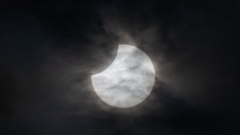
A partial-to-total solar eclipse and the peak of the Perseid meteor shower occurred around the same Wednesday, drawing global skywatching attention. Reports differed in emphasis: some outlets focused on the eclipse's visibility across the UK, Ireland, Spain, Iceland and Greenland, while others highlighted the Perseids as the year's best meteor viewing, with a few noting an accompanying six-planet parade.
A solar eclipse and the peak of the Perseid meteor shower both occurred around Wednesday, August 12, 2026, according to multiple outlets including CBS News, BBC News, PBS NewsHour, NPR and The Guardian. The eclipse was reported as visible across parts of the UK and Ireland, with 90-96% of the sun obscured by the moon, marking the first such event visible there since 1999 and the last opportunity until 2081. PBS NewsHour and other sources noted the eclipse reached totality in parts of Spain, Iceland and Greenland, while NPR and CBS News reported partial visibility in parts of the United States. NASA described the Perseid meteor shower as offering the best meteor viewing of the year, with its peak occurring Wednesday night into Thursday morning. PBS NewsHour reported that the best time to view the meteors would come after the eclipse's totality had passed. A solar eclipse occurs when the moon passes between the sun and Earth, blocking its light partially or fully, as explained by The Guardian. Some reports referenced an accompanying six-planet parade occurring around the same time, though this detail was not corroborated across multiple independent sources. As of the published reports, both celestial events were anticipated or in progress, with outlets providing regional viewing guidance for the UK, Ireland, and parts of the United States. The exact global visibility path of the eclipse, including which regions experienced totality versus partial coverage, was described with some variation across sources. Details about the six-planet parade and its precise timing relative to the eclipse and meteor shower remain unresolved due to limited independent corroboration.
SOURCE COMPARISON
How the coverage differs
Perseid meteor shower reaches peak viewing on Wednesday night
The Perseid meteor shower is the best viewing all year, according to NASA.
Read original report ↗Most of sun to be eclipsed across island of Ireland
Skywatchers are set to witness two major celestial events next week, with a deep partial solar eclipse followed by the peak of the Perseid meteor shower.
Read original report ↗How to spot the Perseid meteor shower, a summer light show that promises to dazzle
The meteor shower's peak Wednesday night into Thursday morning coincides with a total solar eclipse across Spain, Iceland and Greenland and a six-planet parade — though the best time to view the fireballs will come after totality.
Read original report ↗Solar eclipse to occur next week. Here is what to know
It will be visible in parts of the U.S. on Wednesday.
Read original report ↗Where in the UK will get the best view of the solar eclipse?
When, where and how to get the optimal view of the first solar eclipse to be visible across the country this century For the first time this century, people across the UK will be able to see an almost total solar eclipse in the evening sky on Wednesday. A solar eclipse occurs when the moon moves between the sun and the Earth, blocking the sun’s light either partly or fully. This year, people in the UK and Ireland will see 90-96% of the sun covered by the moon for the first time since 1999 – and it’s their last chance until 2081. Continue reading...
Read original report ↗